Month: July 2008

  • KIVA


    I wanted to let you know about Kiva (www.kiva.org), a non-profit that allows you to lend as little as $25 to a specific low-income entrepreneur in the developing world.  You choose who to lend to – whether a baker in Afghanistan, a goat herder in Uganda, a farmer in Peru, a restaurateur in Cambodia, or a tailor in Iraq – and as they repay their loan, you get your money back.  It’s a powerful and sustainable way to empower someone right now to lift themselves out of poverty.
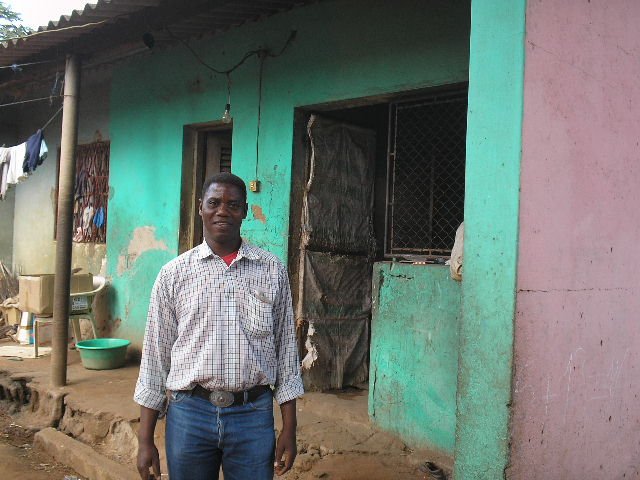


    Catembe, Maputo, Mozambique.   Abel Albino Dlate is 47 years old. He is married and the father of four children, all of whom are school-age and attend school. In addition to caring for his own children and his wife, he supports his mother plus grandchildren, nieces, and nephews, making a total of 18 people in the family for whom he is responsible.


    Abel studied through a basic level of auto-mechanics and was not able to continue because he lost his father very early. He has never moved from this city and always lived here in the city of Maputo. In his free time he likes sports and volleyball. He lives in his own house, inherited from his father.

    Abel has been an employee of C.M.O. for 21 years and works from 7am to 3:30pm. He learned his trade in the industrial school of Matola. He has a monthly salary of 2882 meticals. This is his second loan. His dream is to complete the restoration of his home and ask for another loan to construct small rooms to rent in order to add to the family’s income. http://www.kiva.org/app.php?page=businesses&action=about&id=57641
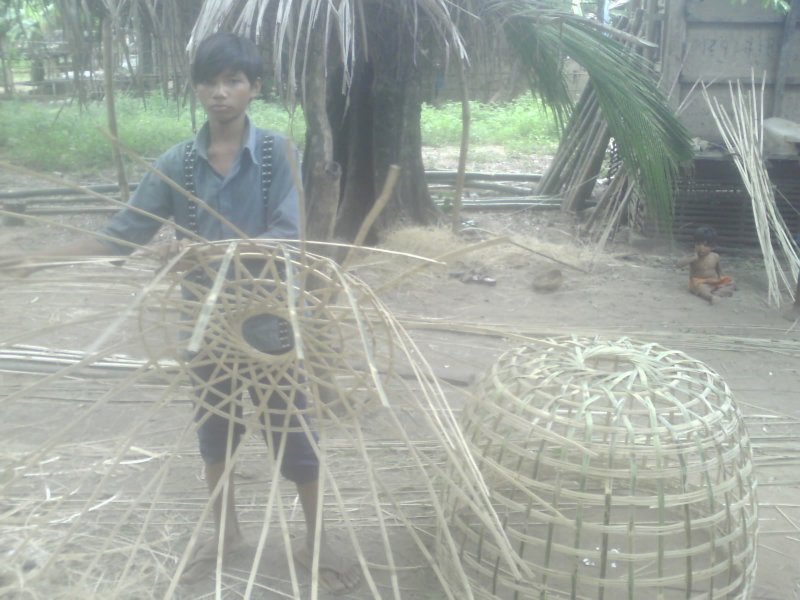


    Mr. Heam Chanseng makes bamboo chicken coops to sell from his house while his wife is a farmer. They have four children and live in Run Choeung Village, Siem Reap Province, Cambodia.  All of their children are young and in school.


    Because of the ever increasing cost of living, Heam Chanseng needs to increase his income and he is now asking for a loan to purchase oxen and pigs to breed. He plans to use the remainder of the loan to purchase more bamboo to make coops to sell. The loan will allow him to expand his business and increase the family’s income as well as improving their living conditions. (The picture is of one son of Mr. Chanseng) http://www.kiva.org/app.php?page=businesses&action=about&id=55994


  • Chase the Light Fantastic

    The Milky Way Galaxy is, conservatively, 100,000 light years wide from one end to the other.    We are near the end of one of the extended spiral arms, on the outskirts of our galaxy.   That means, that if you look at our galactic core, what you see is 50,000 years old by the time you see it.     If you wanted to travel there, and you went at the speed of light, it would take you 50,000 years to get there, if there still exists. . .   A round trip would be 100,000 years, at the speed of light, and you might have trouble finding where our sun has moved to, to return home, if the sun lasts that long.


    Or, how about this.  IF the stars origionally exploded from our galactic core, in a faster than light explosion, then the galactic core, and some stars you think you see in the sky, may actually have been previous positions of our own sun, 50K, 40K, 30K, or 20,000 years ago.


    Makes me chew gum.

  •  


    No good ideal ever loses its value.          


    That makes some of them worth keeping.


    The Sea Turtle


  • FLUX

    Wax heated by flame

    Disturbed and set free

    No longer fixed


    Everywhere has been a time of making decisions.

    They drop into place like a key to be turned in a lock.

    They open doors and future pathways.

    Streaming down the sides of this candle of time

    They form new places

    Where all must ride their chosen mounts.

  • The Niobrara Sea


    Eighty five million years ago, long before The Great Ice Age came and locked away vast amounts of water at the poles, the earth was much warmer, and the great Niobrara Sea, also known as The Western Interior Seaway, covered Middle America. Stretching from Utah to Iowa, during the Cretaceous period, this inland sea allowed water travel from the North Pole all the way to the equator, right through the very center of what is now North America. During the age of the dinosaurs, for millions of years, the entire state of Kansas, and most of the surrounding states, lay submerged as the floor of a vast inland sea.


    Palm trees, cottonwoods, cedars, giant ferns, and flowering trees lined the fertile coasts and dotted the sporadic rocky islands. In the sky, Pteranodons, hairy winged lizards that resembled giant bats with long pointy beaks and wing-spans as large as two cars, soared above the teeming waters hunting for fish. The Niobrara Sea was full of life. Colonies of Crinoids and Nautiloids swam in pulsating motions among vast shoals of fish. Herds of crab ranged among the swaying reef-building coral, pointy sea urchins, and the thick beds of bottom dwelling clams, some of which grew as big as three foot wide. Giant squid swam and fed in the waters of the Niobrara Sea, among other true sea monsters, like the snake-necked Plesiosaur that grew up to 40 ft long, and the terrifying piranha-jawed Xiphactinus, the largest of all bony fish , that grew up to 20 foot long, and had eyes the size of dinner plates, and the truly terrifying 50 foot long crocodile with fins, called a Mososaur.


    ‘Cretaceous’ means ‘abounding in chalk’ and while huge dinosaurs walked about on the dry lands of the Cretaceous period, there were also clouds of billions of tiny one-celled golden brown algae, known as ‘calcareous’ algae, with delicate calcium carbonate shells, that floated in the warm wet Niobrara Sea. As these microscopic plants died, their protective shells slowly drifted down like an invisible snow that slowly built up on the sea floor. In parts of Kansas, the Niobrara Sea left chalk deposits 600 feet thick, similar to the more famous white cliffs of Dover, in England. In places where there was more heat and the crushing weight of the deep sea, hundreds of feet of limestone deposits were formed. In other places there are deposits of sandstone, formed from the Cretaceous-era beaches of the great Niobrara Sea. As the Rocky Mountains rose up on the western shores, the Niobrara Sea receded, and eventually disappeared into the Great Plains of the American Midwest.